
Indian Climate vs Baby Soap that Works, India February 2026
India’s climate is unique—and challenging. From intense summers and humid monsoons to dry, cold winters, the weather changes dramatically across regions and seasons. While adults can adjust easily, baby skin is far more sensitive, making everyday choices like baby soap extremely important.
🚀 Click here For Baby Soap: that is 100% safe yet effective.
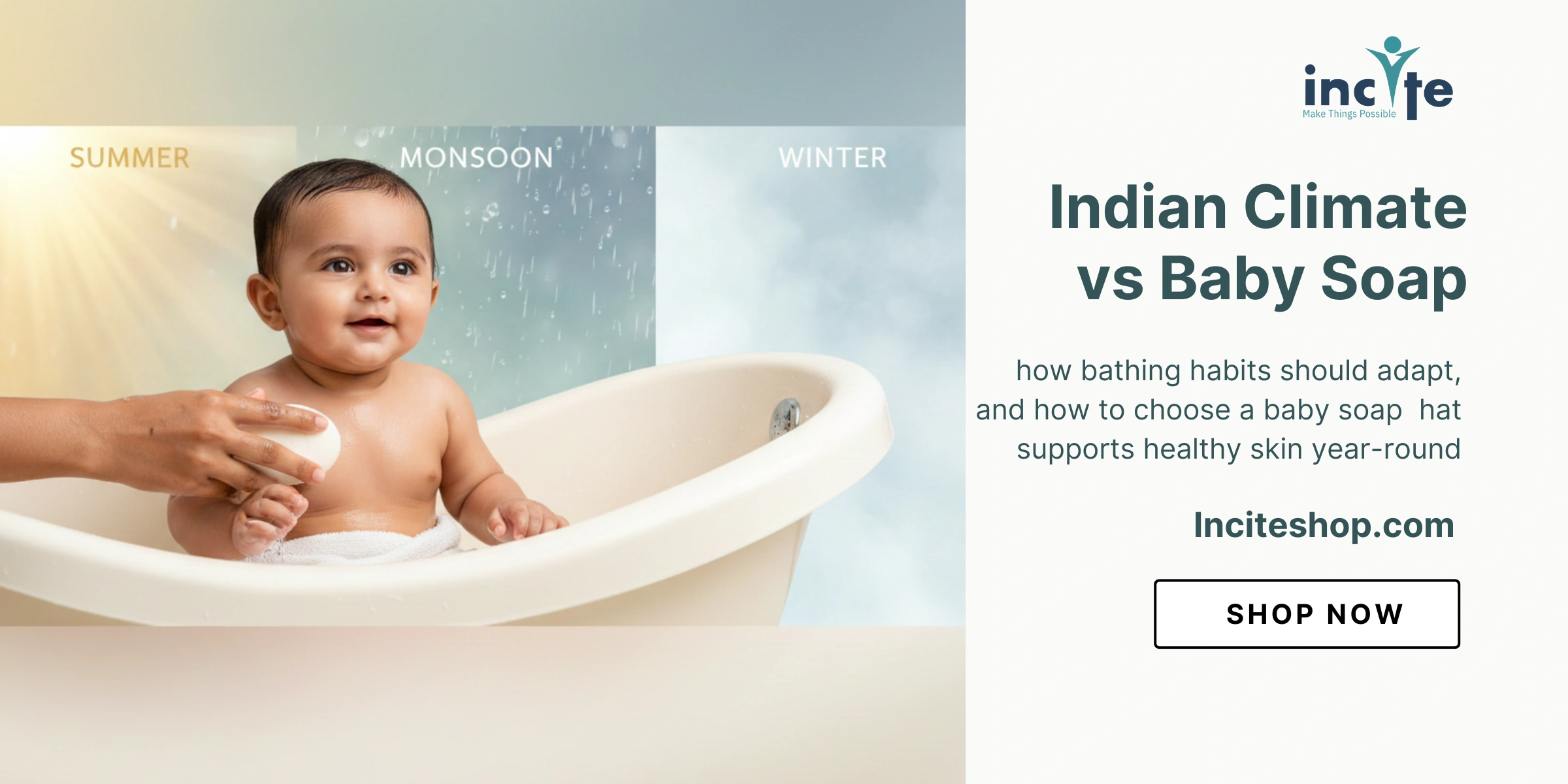
Many parents assume that one baby soap works everywhere, all year round. But does Indian climate influence how baby soap performs on delicate skin? And how can parents choose a baby soap that actually works across seasons?
Let’s explore how Indian weather affects baby skin, how bathing habits should adapt, and how to choose a baby soap that supports healthy skin year-round.
Why Indian Climate Strongly Affects Baby Skin During Bathing | Indian Climate vs Baby Soap that Works
Baby skin is still developing its protective barrier. Compared to adult skin, it is:
- Thinner and more absorbent
- More sensitive to temperature changes
- Prone to moisture loss
- Easily irritated by harsh cleansing
Indian climate adds extra stress due to: Indian Climate vs Baby Soap that Works
- Extreme heat and sweating
- High humidity levels
- Seasonal dryness
- Dust and pollution
Because bathing directly interacts with baby skin, the type of soap used becomes critical, especially when climate conditions change.
How Baby Skin Reacts to Weather Changes | Indian Climate vs Baby Soap that Works
🌞 Hot and Humid Conditions
In summer and coastal regions:
- Babies sweat more
- Skin becomes sticky and prone to rashes
- Over-cleansing can strip natural oils
Using harsh or overly drying soaps in this climate may lead to irritation.
🌧️ Monsoon Conditions
During monsoon:
- Skin may feel moist but lack hydration
- Fungal or heat rashes are more common
- Overuse of soap can worsen sensitivity
Gentle cleansing is key.
❄️Cold and Dry Winters | Indian Climate vs Baby Soap that Works
In winter:
- Skin loses moisture quickly
- Dry patches and flakiness appear
- Babies may feel itchy after bathing
Here, baby soap must cleanse without drying the skin further.
Baby Soap Needs in Indian Summer | Indian Climate vs Baby Soap that Works
Indian summers can be intense, especially from March to June.
Should Babies Be Bathed Daily in Summer?
Yes—but soap use should be minimal and gentle.
Summer Bathing Best Practices:
- Use baby soap once daily
- Choose a mild, non-drying soap
- Avoid excessive lather
- Rinse thoroughly to prevent residue
In summer, baby soap should clean sweat and dirt without disturbing the skin’s natural balance.
Monsoon Season and Baby Bathing Habits
Monsoon weather brings high humidity, dampness, and fluctuating temperatures.
Common Mistake:
Parents either over-bathe with soap or avoid bathing altogether.
Smart Monsoon Bathing Tips:
- Bathe once daily or once every two days
- Use soap only when needed
- Focus on skin folds where sweat collects
- Pat dry carefully after bathing
Using a gentle baby soap during monsoon helps keep skin clean without triggering dryness or irritation.
Winter Climate and Baby Soap Selection | Indian Climate vs Baby Soap that Works
Winter is when baby skin needs the most protection.
Why Winter Requires Extra Care:
- Cold air removes skin moisture
- Frequent soap use can worsen dryness
- Babies may develop flaky or tight skin
Winter Bathing Recommendations:
- Reduce soap quantity
- Limit bathing duration
- Use soap only once daily or on alternate days
In winter, baby soap should cleanse without stripping oils, making formulation quality crucial.
Can One Baby Soap Work Across All Indian Seasons?
Yes—if the soap is truly gentle and skin-friendly.
Instead of changing soaps every season, parents can:
- Choose a mild, baby-specific soap
- Adjust bathing frequency
- Reduce or increase soap usage based on weather
The key is flexible usage, not frequent product switching.
Common Baby Soap Mistakes Parents Make | Indian Climate vs Baby Soap that Works
Many baby skin problems come from how soap is used, not the soap itself.
❌ Using Too Much Soap
More foam does not mean better cleaning.
❌ Bathing Too Frequently With Soap
This removes protective natural oils.
❌ Ignoring Seasonal Changes
Using the same routine in summer and winter.
❌ Not Rinsing Properly
Soap residue can irritate baby skin.
Avoiding these mistakes goes a long way in protecting delicate skin.
How to Choose Baby Soap for Indian Climate
When selecting baby soap suitable for Indian weather, look for: Indian Climate vs Baby Soap that Works
✔ Gentle cleansing action
✔ Skin-friendly formulation
✔ Suitable for daily use when needed
✔ Non-drying and mild
✔ Designed for sensitive baby skin
A baby soap should support the skin barrier, not fight against it.
Why KOSOFT SOAP Is a Thoughtful Choice for Indian Babies
For parents looking for a baby soap that works well across Indian climates, KOSOFT SOAP Baby Soap is designed with gentle daily cleansing in mind.
👉 Product link:
https://inciteshop.com/product/kosoft-soap/
🌿What Makes KOSOFT SOAP Suitable for Indian Weather? Indian Climate vs Baby Soap that Works
- Mild and Gentle Cleansing: Helps clean baby skin without stripping moisture
- Daily-Use Friendly: Can be used safely when bathing regularly
- Suitable for Sensitive Skin: Designed keeping baby skin sensitivity in mind
- Climate-Compatible: Works well in summer, monsoon, and winter with adjusted usage
Instead of switching soaps every season, many parents prefer adjusting how often they use KOSOFT SOAP depending on weather and skin condition.
Doctor-Guided Baby Bathing Tips by Season (General Guidance)
While individual needs vary, general guidance includes:
- Summer: Daily bathing, minimal soap
- Monsoon: Gentle soap use, focus on hygiene
- Winter: Reduced soap quantity, shorter baths
Always observe how your baby’s skin responds and adjust accordingly.
The Role of Water Quality in Indian Baby Bathing | Indian Climate vs Baby Soap that Works
In many parts of India, water quality varies greatly and can directly impact baby skin. Hard water, which contains higher mineral content, can make soap residue harder to rinse off and may leave baby skin feeling dry or tight. Using a gentle baby soap and rinsing thoroughly becomes even more important in such conditions to avoid irritation. Parents should always ensure the soap used does not leave a heavy film on the skin after bathing.
Read a similar article on “Indian Climate and Baby Soap Effectiveness, India February 2026”
How Pollution and Dust Increase the Need for Gentle Baby Soap
Urban Indian environments often expose babies to dust, smoke, and pollution particles that settle on the skin. While cleansing is necessary to remove these impurities, using harsh soaps can do more harm than good. A mild baby soap helps clean the skin effectively while preserving its natural barrier, especially for babies who spend time outdoors or in polluted areas.
Baby Bathing Frequency Should Change With Weather
Many parents follow a fixed bathing routine throughout the year, but this may not suit baby skin in all seasons. During hot summers, daily bathing may be needed to remove sweat, while in winter, bathing every alternate day can help prevent excessive dryness. Adjusting soap usage along with bathing frequency ensures the baby’s skin stays comfortable and healthy.
Why Over-Cleansing Can Disrupt Baby Skin Balance | Indian Climate vs Baby Soap that Works
Baby skin produces natural oils that help protect against dryness and irritation. Over-cleansing with soap, especially during dry or cold weather, can strip away these oils and weaken the skin’s natural defenses. Using a gentle baby soap only when necessary helps maintain this delicate balance and reduces the risk of dryness or sensitivity.
Observing Baby Skin Signals Is More Important Than Fixed Rules
Rather than strictly following routines, parents should observe how their baby’s skin responds to weather, bathing, and soap use. Signs like redness, dryness, or discomfort indicate the need to adjust soap frequency or bathing habits. Paying attention to these signals allows parents to provide climate-appropriate care and avoid unnecessary skin issues.
Indian Weather vs Baby Body Lotion: India February 2026
India’s weather is anything but uniform. From scorching summers and humid monsoons to dry, chilly winters, climate conditions change drastically across regions and seasons. While adults adapt easily, baby skin reacts much faster to weather changes, making skincare decisions—especially baby body lotion use—extremely important. Read more…
Final Verdict: Climate-Smart Baby Bathing
Indian climate plays a major role in how baby soap affects skin health.
The same soap can behave differently depending on heat, humidity, or dryness.
The smartest approach for parents is to:
- Choose a gentle, baby-specific soap
- Adjust bathing habits with seasons
- Avoid over-cleansing
- Watch your baby’s skin signals
With mindful bathing practices and a gentle option like KOSOFT SOAP Baby Soap, parents can maintain clean, comfortable, and healthy baby skin throughout the year.
Frequently Asked Questions (FAQ) | Indian Climate vs Baby Soap that Works
Does Indian climate affect baby soap choice?
Yes. Weather influences skin moisture and sensitivity, making soap selection important.
Can baby soap be used daily in summer?
Yes, if the soap is mild and used in small amounts.
Is baby soap necessary in winter?
Yes, but soap quantity and bathing frequency should be reduced.
Can one baby soap work in all seasons?
Yes, when it is gentle and used thoughtfully according to climate.