How to Give Kids Protein Without Meat? India December 2025
For many families in India who follow vegetarian or plant-based diets, ensuring children receive sufficient protein without meat is a common concern. Meat provides a complete protein (all nine essential amino acids) and highly absorbable heme iron.
🚀 Click here For Protein for Babies: that is 100% safe yet effective.
How to Give Kids Protein Without Meat? The good news, supported by nutritional experts, is that the Indian vegetarian diet is perfectly capable of providing all the protein and micronutrients a growing child needs. The strategy lies not in finding a single substitute, but in mastering food combinations and ensuring adequate intake of specific micronutrients.
The Core Challenge: Replacing Complete Protein and Iron | How to Give Kids Protein Without Meat?
To successfully feed a child without meat, we must solve two main nutritional challenges that meat typically solves easily:
- Protein Completeness: Most plant sources are “incomplete” (lacking one or two essential amino acids).
- Iron Absorption: Plant-based iron (non-heme iron) is not as easily absorbed as animal-based iron (heme iron).
The success of a meat-free diet hinges on addressing these two factors consistently in every meal.
The Solution: Mastering Complementary Protein Combinations
The “how-to” of providing protein without meat is about mixing and matching foods to ensure the child consumes all nine essential amino acids in one sitting.
Formula 1: Pulse + Grain (The Daily Necessity)
This combination is the backbone of the healthy Indian diet and is the most reliable way to achieve complete protein without meat. How to Give Kids Protein Without Meat?
- The Science: Grains (like rice and wheat) are rich in the amino acid methionine, which is lacking in pulses. Pulses (like dal and beans) are rich in lysine, which is lacking in grains. Combining them creates a complete protein.
- Actionable Steps (How-To):
- Ensure Dal or Rajma is served with Rice or Roti at every main meal (lunch and dinner).
- Use Besan (Gram Flour) in cheela or dhokla alongside atta (wheat) for a balanced snack.
- For snacks, pair whole-wheat toast with a peanut or almond butter spread.
Formula 2: Dairy + Cereal/Seed (The High-Density Boost)
This combination is vital for toddlers (1-3 years) and pre-schoolers who need nutrient-dense calories. Dairy is a complete protein, and combining it with seeds or cereals boosts fiber and vitamins. How to Give Kids Protein Without Meat?
- The Science: Dairy provides complete protein and highly bioavailable calcium. Combining it with seeds (like sesame or pumpkin) boosts zinc and essential fats, providing density that meat often provides.
- Actionable Steps (How-To):
- Mix Paneer (Cottage Cheese) into pulao or mashed vegetable fillings.
- Serve Yogurt (Dahi) as a side with every meal, or mix it with Ragi Porridge for breakfast.
- Use ground seeds (flax or sesame) mixed into rice, oatmeal, or upma.
Best Meat-Free Protein Sources for Kids (Focus on Density and Texture)
These sources can be used as the central “main course” element in meat-free meals, offering the necessary protein density. How to Give Kids Protein Without Meat?
| Source | Protein Content & Role | Preparation & Substitution |
| Soya Chunks / Tofu | High-quality complete protein; excellent source of B vitamins. | Substitute for ground meat in keema or bhurji; soak and finely chop before cooking. |
| Paneer | Complete protein, high fat, and calcium; highly digestible. | Use in curries, grate into vegetable parathas, or serve as a snack with spices. |
| Eggs (Ovo-Vegetarians) | The most bioavailable complete protein; rich in Choline and Vitamin D. | Serve daily. Can be boiled, scrambled, or cooked into masala omelettes (over 1 year). |
| Lentils (Rajma/Chana) | Excellent protein, fiber, and primary source of plant-based iron. | Must be cooked thoroughly and mashed or puréed for toddlers to aid digestion. |
| Nut Butters | Good protein and essential healthy fats. | Serve as a thin spread on toast or crackers; mix into porridge. (Avoid whole nuts until age 4+). |
Addressing Micronutrient Gaps (Iron and B12) | How to Give Kids Protein Without Meat?
While protein is the main focus, parents choosing a meat-free diet must monitor for Iron and Vitamin B12, as these are often sourced easily from meat.
Actionable Steps for Iron Absorption
The key to non-heme iron (plant iron) is to boost its absorption using Vitamin C. How to Give Kids Protein Without Meat?
- Pairing is Essential: Always serve iron-rich plant foods (like dried fruits, legumes, poha, spinach/greens) with a Vitamin C source:
- Add a squeeze of lemon juice to dal or rice.
- Serve iron-rich dishes alongside tomato or citrus fruit.
- Avoid Inhibitors: Avoid giving milk or tea/coffee immediately before or after iron-rich meals, as the calcium and tannins can inhibit absorption.
Actionable Steps for Vitamin B12
Vitamin B12 is almost exclusively found in animal products (meat, dairy, eggs). Since B12 deficiency can lead to irreversible neurological damage, vigilance is mandatory for meat-free diets. How to Give Kids Protein Without Meat?
- Dairy Dependence: For vegetarians, milk and curd are the primary sources.
- Fortified Foods: For strict vegans, B12 must come from fortified foods (certain cereals, soy milks) or supplementation.
All parents raising children on strictly meat-free or vegan diets must consult their pediatrician about B12 testing and supplementation.
Quick, Meat-Free Protein Snacks for Active Kids | How to Give Kids Protein Without Meat?
Easy, portable, and protein-packed snacks are essential for maintaining energy and nutrient intake between meals:
- Hard-Boiled Eggs (Ovo-Vegetarian): Fastest complete protein.
- Sprouted Moong Chaat: High protein, easy to digest, with a squeeze of Vitamin C (lemon).
- Paneer Tikka or Cubes: Great finger food for toddlers (soft).
- Ladoo/Chikki made with Peanut/Groundnut: Excellent fat and protein density.
- Homemade Hummus or Chana Dip: Served with roti pieces or vegetable sticks.
Read a similar article on “How Vegetarian Children Can Meet Protein Needs (India 2025)”
When Supplemental Milk Drinks are Necessary
For most children over 1 year, a balanced diet eliminates the need for supplements. However, supplemental nutritional drinks are critical tools for: How to Give Kids Protein Without Meat?
- Severe Picky Eaters: Children who consistently refuse all key protein groups (dal, dairy, legumes).
- Medical Deficiencies: When diagnostic tests confirm low growth or low levels of specific micronutrients despite a solid diet.
- Toddler Transition: The period between 1 and 3 years is often characterized by fluctuating appetite.
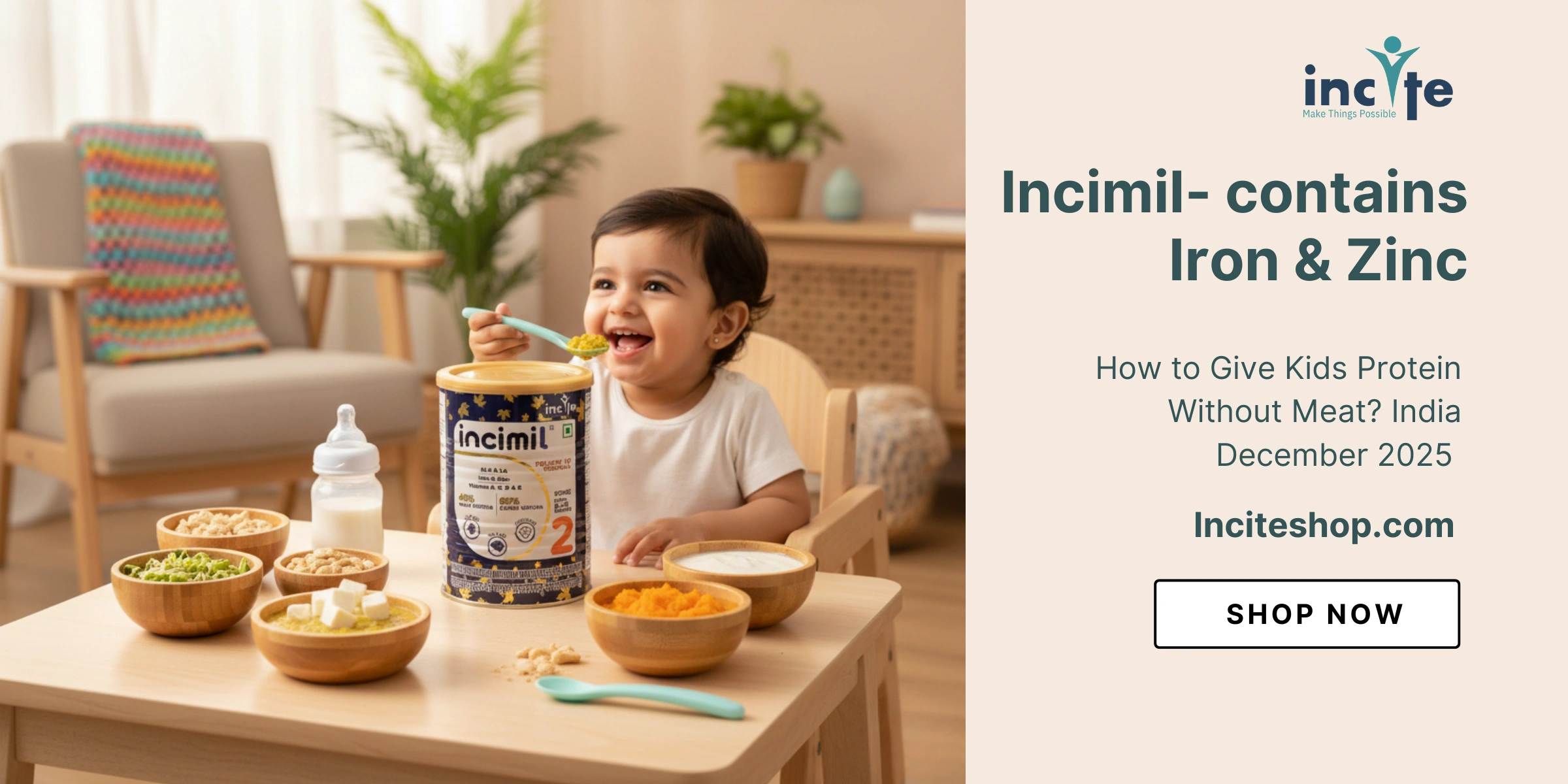
A specialized nutritional milk drink for toddlers (Stage 2) can ensure consistent intake of essential macronutrients and vitamins. A product designed to support this phase, such as [Our website’s specialized Stage 2 formula] (found here: https://inciteshop.com/product/incimil-stage-2/), provides balanced protein, fats, and fortified vitamins suitable for toddlers who may not be meeting their needs through whole food alone. These are complementary and should only be used after consulting a pediatrician.
Frequently Asked Questions (FAQs)
Q1. Is it safe to give my child soya chunks every day?
A. Yes, Soya chunks are an excellent source of complete plant protein and are safe for daily consumption. They are high in protein and iron. Ensure they are prepared properly and are not the only source of protein to maintain dietary variety.
Q2. My child doesn’t like dal. What is the best protein substitute?
A. The best substitute is Paneer or Yogurt, as these are also complete proteins. You can hide the flavor of dal by blending it thoroughly into khichdi, vegetable purées, or even roti dough.
Q3. When should I introduce B12 supplements for a meat-free child?
A. For children who consume dairy and eggs (vegetarians), B12 intake is usually sufficient. However, for strict vegans (no dairy/eggs), supplementation is mandatory and should begin immediately. Always consult a pediatrician or child dietician for B12 testing and prescription.
Q4. Does consuming dairy products prevent iron absorption?
A. Yes, the calcium in dairy can inhibit non-heme iron absorption. To optimize nutrient intake, avoid serving milk or yogurt immediately alongside the main iron-rich meal (e.g., Palak Paneer). Instead, serve milk as a separate snack or drink.
How Do Vegetarian Kids Get Protein? India December 2025
For parents raising children in India on a vegetarian diet, the question of whether their child is receiving sufficient protein is a persistent concern. The misconception that plant-based diets inherently lack protein is widespread. The truth, backed by decades of pediatric research, is that a well-planned Indian vegetarian diet easily meets and often exceeds the protein requirements for growing children, provided one key principle is understood: The Complementary Protein Method. Read more…
Conclusion: The Power of the Indian Thali
The question of “How to give kids protein without meat?” is solved not by complex supplements, but by embracing the wisdom of the Indian thali: the strategic combination of pulses and grains. By mastering Complementary Protein and being vigilant about Iron and B12 intake, parents can confidently raise healthy, thriving children on a meat-free diet, ensuring they meet their full growth potential.