
Is HMF good for babies? India December 2025
The Central Question: Is HMF Good for Babies? (The Short Answer)
For the vast majority of babies, particularly those born at full term, the answer is a simple no—Human Milk Fortifier (HMF) is completely unnecessary, as breast milk provides ideal, complete nutrition.
🚀 Click here For HMF for babies: that is 100% safe yet effective.
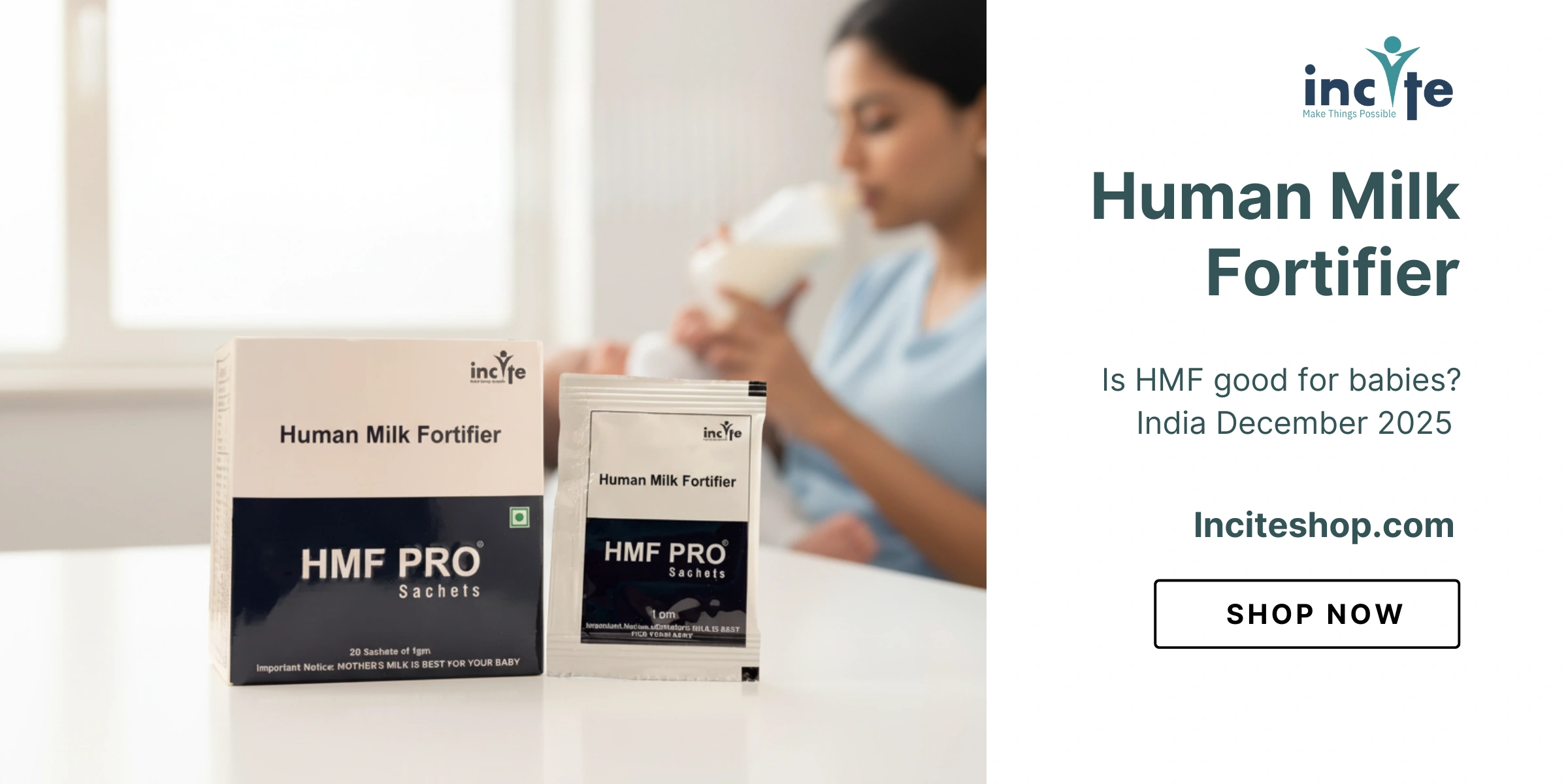
However, for a very specific and vulnerable population—namely, preterm infants (those born before 37 weeks of gestation) and Very Low Birth Weight (VLBW) infants (those weighing less than 1,500g)—the answer is an emphatic yes, HMF is not just good, it is medically necessary and a standard of care.
In the Indian context, where rates of prematurity and VLBW are significant, the appropriate use of HMF is critical to mitigating the risk of Extrauterine Growth Restriction (EUGR), a common challenge in the Neonatal Intensive Care Unit (NICU). As we approach December 2025, neonatology practices in India continue to emphasize evidence-based, early, and targeted nutritional support, making HMF a cornerstone of care.
Understanding Human Milk Fortifier (HMF) and Is HMF good for babies?
Human Milk Fortifier is a nutrient supplement designed to be mixed directly with expressed human breast milk. It is not a standalone formula, but an additive that boosts the caloric, protein, and mineral content of breast milk to meet the unique, accelerated nutritional demands of a premature baby.
The Role of HMF:
- Compensating for Intrauterine Loss: During the third trimester, a fetus receives a rapid accretion of key nutrients (especially protein, calcium, and phosphorus) necessary for organ and skeletal development. A baby born prematurely misses this critical period.
- Preventing Nutrient Deficits: While human milk is biologically perfect for term infants, the nutrient concentration is insufficient for the rapid growth and high metabolic rate of a preterm infant, leading to deficiencies if unfortified.
- Targeting Growth Goals: The primary purpose of fortification is to help the preterm infant achieve a growth rate similar to what they would have experienced in the womb, ensuring optimal development of the brain, bones, and organs.
The E-E-A-T Factor: HMF Safety and Efficacy, Backed by Indian Research
For a sensitive topic like neonatal nutrition, trust and expertise are paramount. The use of Human Milk Fortifiers is not an arbitrary choice but a protocol based on extensive global and regional studies.
Expert Consensus on Efficacy: Answering Is HMF good for babies?
Numerous clinical trials, including those conducted within major Indian neonatal centres, consistently show that fortified human milk leads to significantly improved short-term outcomes for preterm infants compared to unfortified breast milk. These benefits include:
- Enhanced Weight Gain: Faster attainment of target weights.
- Improved Linear Growth: Better bone mineralization and length gain.
- Positive Neurodevelopmental Outcomes: Adequate nutrition is strongly correlated with better long-term neurological health.
Addressing Safety and Risks (The Trust Factor with Is HMF good for babies?):
The primary concerns historically associated with HMF use are feed intolerance and, in rare cases, an increased risk of Necrotizing Enterocolitis (NEC), a serious gut condition.
- Modern Formulations: Contemporary HMF products are designed to minimize these risks by focusing on:
- Osmolality: Maintaining a low, safe osmolality to prevent gastrointestinal upset.
- Probiotics and Prebiotics: Many advanced fortifiers now include ingredients to support a healthy gut microbiome.
- Protocol: In all reputable NICUs in India, fortification is introduced gradually, typically once the baby is tolerating a certain volume of enteral feeds, and is closely monitored by the neonatal care team.
Nutritional Science: Why Breast Milk Alone Isn’t Enough for Preterm Growth
The nutritional gap between a preterm infant’s needs and the composition of unfortified breast milk is stark.
| Nutrient | Preterm Infant Needs (Target) | Unfortified Breast Milk (Per 100 mL) | HMF Role |
| Protein | 3.5–4.5 g/kg/day | 1.1–1.5 g | Provides high-quality, easily digestible protein to support cell growth and organ development. |
| Energy (Calories) | 110–135 kcal/kg/day | ~67 kcal | Increases caloric density to meet high energy expenditure. |
| Calcium & Phosphorus | High accretion rates needed | Insufficient for bone mineralization | Essential for preventing osteopenia of prematurity and supporting skeletal growth. |
| Vitamins | Elevated requirements | Often variable/insufficient | Boosts levels of critical fat-soluble (A, D, E, K) and water-soluble vitamins. |
To bridge this crucial gap, a fortifier must be comprehensive. Our advanced Human Milk Fortifier (HMF) solution is one example of a product designed with a specific focus on balanced protein, energy, and mineral delivery to closely match the intrauterine growth requirements of Indian preterm infants. You can find out more about the nutritional profile here: Our advanced Human Milk Fortifier (HMF) solution.
The India Focus: HMF Guidelines, Availability, and the December 2025 Context for Is HMF good for babies?
The adoption of HMF in India has grown significantly as neonatal care standards have advanced. While institutional protocols may vary slightly, the general consensus across major Indian medical societies supports fortification for VLBW and preterm infants.
Why December 2025 Matters
The inclusion of a specific date in your keyword phrase highlights the need for up-to-date and future-focused information. In the rapidly evolving landscape of Indian healthcare, guidelines are continually refined. As of late 2025, the focus is increasingly on:
- Early Fortification: Initiating fortification sooner (often once the baby tolerates 60-80 mL/kg/day of feeds) to prevent early growth failure.
- Individualized Fortification: The future trend involves using advanced techniques to test a mother’s milk composition and then adjusting the HMF dose to meet the baby’s precise, daily needs (known as Adjustable or Targeted Fortification). This practice, while complex, is gaining traction in premier Indian NICUs.
- Product Availability and Cost: The Indian market has seen an increase in locally sourced and scientifically formulated fortifiers, leading to better accessibility in both metropolitan and tier-2 cities. Availability and competitive pricing are key factors for parents to consider, alongside nutritional quality.
Accessibility and Logistics in India
For parents outside of major metros, logistical factors are crucial. High-quality HMF products are typically available:
- Through specialized hospital pharmacies attached to NICUs.
- Via prescription from a neonatologist.
- Through specialized online platforms that ensure cold-chain maintenance or proper storage (if applicable to the product type) and distribution across India.
Choosing the Right Fortifier: Key Features of a High-Quality HMF Product
When consulting with your child’s medical team about fortification, a high-quality product should possess certain critical features tailored for vulnerable preterm babies:
- High Protein-to-Energy Ratio: The fortifier must provide a protein boost greater than the calorie boost, addressing the preterm baby’s severe protein deficit. Look for a product prioritizing high-quality, easily digestible protein sources (e.g., whey).
- Optimal Mineral Profile: A good fortifier provides balanced levels of Calcium and Phosphorus to maximize bone mineralization and prevent metabolic bone disease.
- Specific Nutrient Additions: The inclusion of compounds like Medium-Chain Triglycerides (MCTs) is beneficial, as preterm infants have difficulty absorbing long-chain fats.
- Dissolvability and Hygiene: A formulation designed for quick, clump-free dissolution in human milk is vital to ensure accurate dosing and prevent feeding tube blockages. Hygienic, single-use sachet packaging minimizes the risk of bacterial contamination, which is a major advantage in the Indian climate and home-care setting.
By choosing a trusted, scientifically-formulated Human Milk Fortifier like the one linked above, parents can be assured that the product meets stringent nutritional and safety standards.
Practical Parenting: Administration, Potential Concerns, and NICU Protocol
Parents often have questions regarding the practical use of HMF:
Who Administers HMF? Is HMF good for babies?
In the NICU, HMF is prepared and administered by trained nurses under the strict supervision of the neonatology team. Upon discharge, parents are given precise instructions for preparing the fortified milk at home. Never deviate from the dose prescribed by your pediatrician.
Administration Tips for Home Use:
- Mixing: Always measure the fortifier and breast milk precisely using calibrated measuring tools.
- Temperature: Mix the fortifier into the breast milk just prior to feeding, typically at room temperature or slightly warmed.
- Freshness: Once fortified, the milk has a limited shelf life (usually 2-4 hours, depending on the product and storage guidelines), so mix only what is needed for one feed.
Read a similar article “Nutrition Support for Preterm Babies in India 2025”
Potential Concerns to Monitor with Is HMF good for babies?
While generally well-tolerated, parents should monitor for signs of feed intolerance:
- Increased abdominal distention or bloating.
- Increased frequency or volume of residual milk in the feeding tube (if still in use).
- Frequent vomiting or reflux.
Report any of these signs immediately to your pediatrician. Adjustments to the fortification dose or type may be necessary to ensure optimal digestion and nutrient absorption.
Strawberry Flavour Kids Toothpaste for Strong Teeth, India November 2025
A child’s smile is one of the most heartwarming sights in the world — bright, innocent, and full of life. But behind that beautiful smile lies an important responsibility for parents: maintaining strong, healthy teeth from an early age. As India continues to embrace advanced child wellness products, one innovation has made brushing both fun and effective — Strawberry Flavour Kids Toothpaste for Strong Teeth. Toothbrushing can often be a struggle for parents, especially when children dislike the taste or texture of regular Read more…
Conclusion and Next Steps in answering the question Is HMF good for babies?
The question, “Is HMF good for babies?” is answered definitively: Yes, Human Milk Fortifier is a life-changing, necessary nutritional tool for preterm and VLBW infants in India. It is the critical factor that transforms human milk from a good diet to an ideal, catch-up diet, promoting growth and better long-term health outcomes.
As of December 2025, the standard of care in India is clear: early, careful, and expert-guided fortification must be used to ensure these vulnerable babies can thrive.
Always partner closely with your medical team. The decision to start, stop, or adjust fortification should only be made by the neonatologist or pediatrician managing your child’s care, who can tailor the protocol to your baby’s unique health profile and growth trajectory.