
What is Good Protein for Kids? India December 2025
As children grow from toddlers to school-age, their protein needs change dramatically. Protein is the foundational nutrient for height growth, muscle development, cognitive function, and immune defense. For parents navigating the vast and varied Indian diet, the question isn’t just “Does my child get enough protein?” but “What is good protein?”
🚀 Click here For Protein for Babies: that is 100% safe yet effective.
In the Indian context (December 2025), a “good” protein strategy emphasizes variety, smart combinations, and high bioavailability to ensure optimal growth without relying on expensive, often unnecessary, supplements.
The Short Answer: What Makes Protein “Good”? What is Good Protein for Kids?
Good protein for children is characterized by its completeness (providing all essential amino acids) and its bioavailability (how easily the body can absorb and utilize it).
| Quality Factor | Definition | Best Indian Source Examples |
| Completeness | Contains all nine essential amino acids necessary for growth. | Eggs, Chicken, Paneer, or Dal combined with Rice/Roti. |
| High Bioavailability | The percentage of protein the body actually absorbs and uses (animal sources are highest). | Milk, Yogurt, Eggs. |
| Variety | Mixing sources to obtain different amino acid profiles and essential micronutrients. | A meal combining pulses, grains, and dairy (e.g., Rajma Chawal with a side of Dahi). |
Daily Protein Requirements by Age Group (1 to 12 Years) | What is Good Protein for Kids?
Protein needs are highest during the rapid growth spurts of toddlerhood and adolescence. These requirements are based on the latest recommendations from the Indian Council of Medical Research (ICMR-NIN):
| Age Range | Average Weight (Approx) | Daily Protein Requirement (RDA) | Key Growth Focus |
| 1 – 3 Years (Toddler) | 12 kg | Approx 16.7 g/day | Brain development, motor skills, transition to family foods. |
| 4 – 6 Years (Pre-School) | 18 kg | Approx 20.1 g/day | Energy for activity, maintaining immunity. |
| 7 – 9 Years (School Age) | 25 kg | Approx 29.2 g/day | Early growth spurt, muscle development. |
| 10 – 12 Years (Pre-Adolescent) | 35 kg | Approx 39.9 g/day (Girls); 40.8 g/day (Boys) | Height gain, preparing for puberty. |
The Core of the Indian Diet: Complete Vegetarian Protein
For a country with a large vegetarian population, the key to achieving “good protein” is understanding how to combine plant-based sources to create a complete amino acid profile.
Pulses & Cereals: The “Complete Protein” Formula
Plant-based foods are often “incomplete” because they lack one or more essential amino acids. However, when combined, they form a complete protein, which is fully utilized by the body, similar to meat. What is Good Protein for Kids?
- The Classic Combination: The pairing of Cereals (like Rice, Roti, or Wheat) with Pulses (like Dal, Rajma, or Chana) is the foundation of protein sufficiency in India.
- Example: Dal + Chawal, Roti + Rajma, or Besan (Gram Flour) Cheela (a pulse) with Atta (Wheat) Roti (a cereal) all provide complete protein.
- Best Pulses for Kids: Moong Dal (split yellow lentils), Masoor Dal (red lentils), and Chana (chickpeas) are highly recommended for their excellent nutrient profile and relative ease of digestion.
Dairy: The Powerhouse Trio (Milk, Paneer, Yogurt) What is Good Protein for Kids?
Dairy is one of the most accessible and highly bioavailable sources of complete protein for Indian children.
- Milk (Fluid): Essential for toddlers (after age 1) and growing kids. Provides high-quality protein (whey and casein) and crucial calcium.
- Paneer (Cottage Cheese): A complete protein and an excellent source of calcium and fat. It can be easily incorporated into curries, snacks (tikkas), or simply mashed for toddlers.
- Yogurt (Dahi): The proteins and fats are partially broken down during fermentation, making Dahi highly digestible. It also introduces beneficial probiotics.
Soy and Complementary Proteins | What is Good Protein for Kids?
Soy and Tofu are rare examples of complete plant-based proteins. Soya chunks (Nutri-nuggets) are excellent, inexpensive sources of high protein and are versatile for use in curries or pulao. Other useful vegetarian proteins include groundnuts (peanuts) and seeds (chia, flax, pumpkin).
Essential Animal Proteins for Growth and Immunity
Animal sources of protein are considered “good” because they are naturally complete and have the highest bioavailability, meaning the body wastes very little of the protein consumed. What is Good Protein for Kids?
- Eggs: Often called the “perfect protein,” eggs are affordable, versatile, and contain all nine essential amino acids. They are also rich in choline, which is vital for brain development.
- Preparation: Eggs can be easily served as boiled, scrambled, or in a cheela for quick breakfast or snack protein.
- Poultry and Fish: Lean chicken is an excellent source of complete protein. Fatty fish (like Salmon, Mackerel, or Surmai) are highly recommended for their protein content combined with essential Omega-3 fatty acids (DHA and EPA), which are critical for cognitive health in school-age children.
- Safety Note: Always ensure all animal proteins are thoroughly cooked to eliminate the risk of bacterial contamination.
Supplemental Protein: When Formulas and Milk Drinks Help | What is Good Protein for Kids?
For most children following a balanced Indian diet, supplemental protein powders are unnecessary. However, there are specific instances where medically-endorsed nutritional support is beneficial:
- Picky Eaters: Children who consistently refuse high-protein foods (dairy, pulses, eggs) may benefit from supplemental sources to ensure their daily protein and micronutrient needs are met.
- Transition Period (1–3 Years): Toddlers transitioning off breast milk or specialized infant formula sometimes struggle to meet their nutritional requirements through solids alone.
- High Activity/Malnutrition: Kids with very high levels of physical activity or those diagnosed with specific growth deficits may require additional prescribed support.
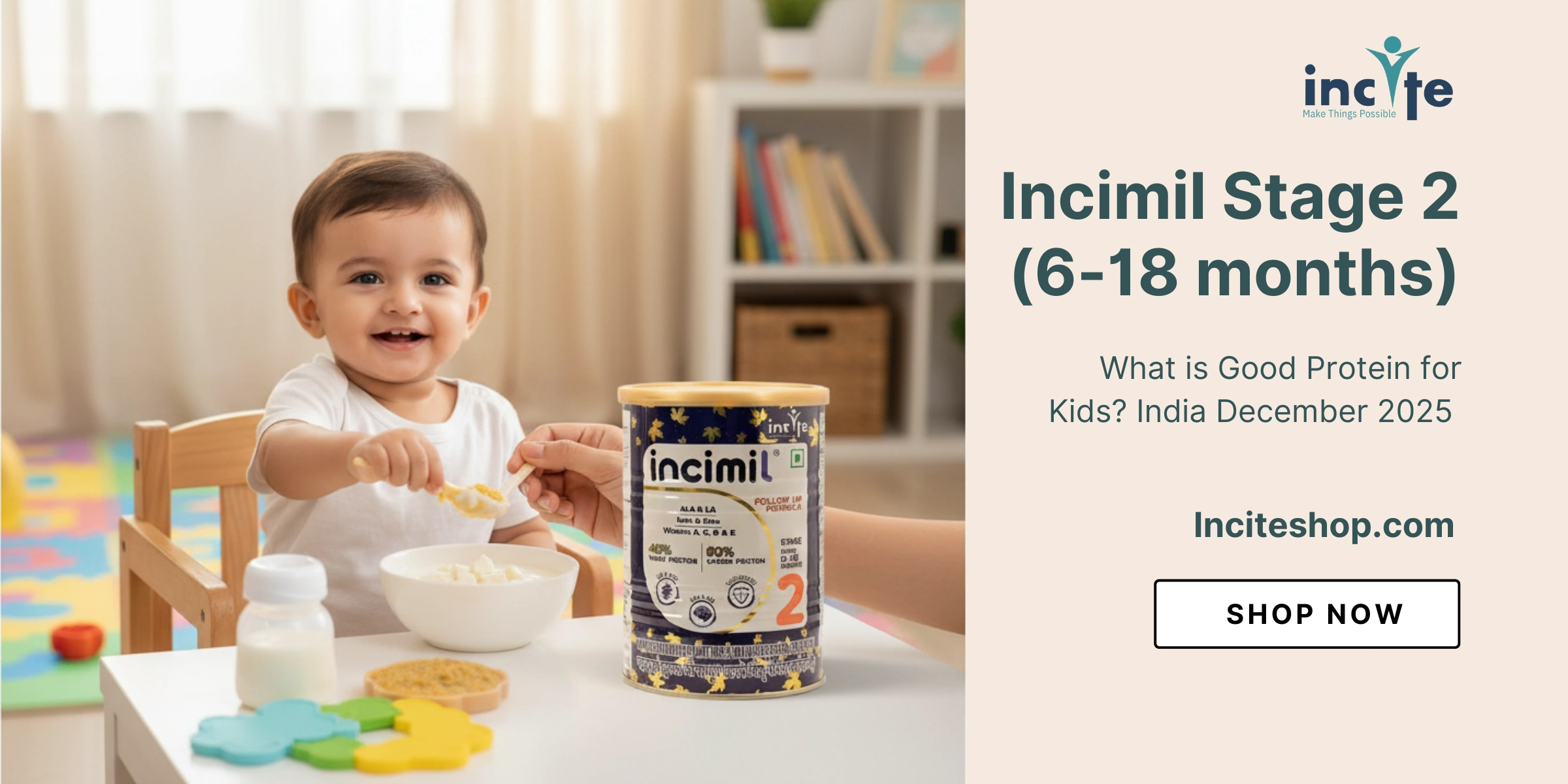
If a child requires supplemental nutrition to support growth and transition, a doctor may recommend a specialized formula or nutritional supplement. A product designed to support this transition, such as [Our website’s specialized Stage 2 formula] (found here: https://inciteshop.com/product/incimil-stage-2/), offers balanced protein, vitamins, and minerals appropriate for this age group, often filling dietary gaps common in early childhood. These should only be used under pediatric guidance.
Protein-Rich Snacks for Active Indian Kids
Snacks should constitute about 10-15% of a child’s daily protein intake. These are excellent, easily prepared, protein-packed Indian snack options: What is Good Protein for Kids?
| Snack Idea | Primary Protein Source | Why it’s Good |
| Sprouts Chaat | Pulses (Mung, Moth) | High protein and fiber; easily digestible and available. |
| Paneer Bhurji Sandwich | Dairy (Paneer) | Complete protein source that provides healthy fats and calcium. |
| Peanut Chikki/Gajak | Groundnuts (Peanut) | Excellent energy source providing protein and essential fats. |
| Besan Cheela/Dosa | Gram Flour (Besan) | Quick, complete protein when served with yogurt or milk. |
| Hard-Boiled Egg | Egg | Easiest and fastest complete protein snack. |
The Safety List: Unprescribed Protein Supplements | What is Good Protein for Kids?
Parents often inquire about unprescribed protein powders marketed for children’s height or muscle gain. Pediatric bodies in India strongly caution against this practice:
- Kidney Strain: These commercial supplements are unregulated for children and pose a serious risk due to high concentrations of protein and additives. Giving them to children places an excessive Renal Solute Load on their immature kidneys, risking long-term damage and dehydration.
- Nutrient Imbalance: They often provide disproportionate amounts of protein, disrupting the balance of fats and carbohydrates essential for brain development and energy production in growing children.
- Hidden Ingredients: Commercial powders may contain added sugars, stimulants, or artificial ingredients unsuitable for children.
Always consult a pediatrician or registered dietician before introducing any form of protein supplement.
Read a similar article on “Building Healthy Eating Habits in Children | India (2025)”
Frequently Asked Questions (FAQs)
Q1. How much protein can a child absorb in one meal?
A. A child’s body is generally very efficient at absorbing the protein it needs. The focus should be on spreading the intake throughout the day (breakfast, lunch, dinner, snacks) rather than trying to maximize it in one sitting. For example, a 5-year-old needs about 20 grams spread across the day.
Q2. Is Paneer or Yogurt a better protein source for a toddler?
A. Both are excellent! Yogurt (Dahi) is highly digestible and provides probiotics. Paneer offers slightly more concentrated protein and fat, making it great for calorie-dense meals. Aim to include both in the weekly diet.
Q3. Can I give my 2-year-old an adult protein powder, but a smaller amount?
A. Absolutely not. Adult protein powders are not formulated for children’s metabolic needs and pose a serious risk due to high concentrations of protein and additives. Stick to whole foods or medically recommended formulas.
Q4. Does protein help my child grow taller?
A. Yes, protein is essential for growth. Height is primarily determined by genetics, but protein, along with adequate Calcium and Vitamin D, provides the necessary building blocks for skeletal and muscle development during growth spurts.
What is the Best First Protein for Babies? India December 2025
The question, “What is the best first protein for babies?” is one of the most vital a parent can ask when embarking on the journey of complementary feeding. Getting the “first protein” right sets the stage for healthy digestion, robust growth, and effective allergy management. To provide the most authoritative answer, we must categorize protein introduction into two distinct phases, aligning with strict Indian Academy of Pediatrics (IAP) and global WHO guidelines. Read more…
Conclusion: What is Good Protein for Kids?
“Good protein” for kids in India is synonymous with variety and balance. It means routinely combining vegetarian sources like dal and roti to create complete proteins, ensuring adequate dairy intake, and incorporating animal protein when possible. By following this balanced, whole-food approach, you provide the optimal foundation for healthy growth and development throughout childhood.